Mark Carney Warns of Global Rupture at Davos
TL;DR
At Davos 2026, Canadian Prime Minister Mark Carney warned that the world is entering a period of geopolitical rupture rather than transition. He argued that the post‑Cold War order has broken down, urging middle powers to adopt “values‑based realism” built on economic strength, diversified alliances, and strategic resilience. Canada is responding with major domestic reforms, expanded defence spending, and a rapid acceleration of global partnerships across Europe, Asia, and the Middle East. Carney called for coordinated middle‑power action to counter coercion and shape new coalitions that work in a fragmented world. For investors, this shifting landscape underscores the need for clarity, strategic positioning, and a resilient long‑term financial plan.
Mark Carney Warns of Global Rupture at Davos
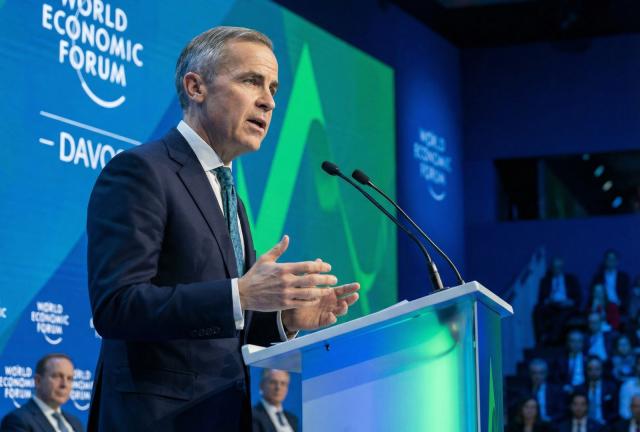
Davos, Switzerland | January 20, 2026
In one of the most closely watched speeches at this year’s World Economic Forum, Canadian Prime Minister Mark Carney delivered a stark assessment of the international landscape, declaring that the world is experiencing a “rupture, not a transition.” His address set out a sweeping redefinition of Canada’s foreign‑policy posture and a call for middle powers to confront geopolitical realities with clarity, unity, and strategic strength.
Carney argued that the post‑Cold War rules‑based order (long treated as a stabilizing framework for global cooperation) has eroded beyond repair. Great‑power rivalry has returned, he said, and economic interdependence is increasingly used as a tool of coercion rather than mutual benefit. “We must face the world as it is, not as we wish it to be,” he told delegates.
A New Doctrine: Values‑Based Realism
The Prime Minister outlined what he called a shift toward “values‑based realism,” a blend of principled commitments and pragmatic strategy. Middle powers like Canada, he said, can no longer rely solely on norms or moral authority. Influence now requires credible economic strength, diversified partnerships, and the ability to withstand pressure from larger states.
Carney invoked Václav Havel’s idea of “living in truth,” urging countries to stop pretending that the old order still functions. Instead, he called for a candid recognition of power dynamics and a willingness to build new institutions and coalitions that actually work.
Rebuilding Strength at Home
Carney highlighted a series of domestic reforms aimed at reinforcing Canada’s economic and strategic foundations. His government has cut taxes on income, capital gains, and business investment; dismantled federal barriers to interprovincial trade; and accelerated more than a trillion dollars in investment across energy, artificial intelligence, critical minerals, and new trade corridors.
Defence spending is set to double by 2030, with investments designed to strengthen Canadian industry while expanding the country’s military capabilities.
A Rapid Expansion of Global Partnerships
On the international stage, Carney described an aggressive diversification strategy. Canada has deepened its partnership with the European Union, including joining European defence procurement mechanisms, and signed a dozen new trade and security agreements across four continents in just six months. New strategic partnerships with China and Qatar were finalized in recent days.
Negotiations are underway with India, ASEAN members, Thailand, the Philippines, and Mercosur, reflecting a deliberate effort to reduce dependence on any single bloc or hegemon.
Coalitions for a Fragmented World
Carney emphasized that Canada is moving away from reliance on weakened multilateral institutions and toward “variable‑geometry coalitions” - flexible groupings built around specific issues. He cited Canada’s central role in supporting Ukraine, its firm stance on Arctic sovereignty alongside Greenland and Denmark, and its unwavering commitment to NATO’s Article 5.
He also outlined efforts to link the Trans‑Pacific Partnership with the European Union to create a vast new trade bloc, form G7‑anchored buyer groups for critical minerals, and coordinate with democratic partners on AI governance.
A Call for Middle‑Power Unity
Carney warned that middle powers risk marginalization if they negotiate individually with dominant states. “If you’re not at the table, you’re on the menu,” he said, arguing that coordinated action is the only way to preserve sovereignty and shape global norms.
He urged countries to apply consistent standards to allies and rivals alike, reduce vulnerabilities to economic coercion, and build institutions that function as advertised; rather than relying on nostalgia for an order that no longer exists.
Canada’s Pitch: A Stable Partner in an Unstable World
Carney positioned Canada as uniquely equipped to lead this middle‑power coalition. With vast energy reserves, critical minerals, a highly educated population, influential pension funds, deep capital markets, and strong fiscal capacity, he said Canada has both the resources and the values needed to help shape a fairer, more resilient global system.
Carney concluded:
“The old order is not coming back. But from this fracture, we can build something stronger and more just - if we choose to act together.”
In a world defined by geopolitical rupture, shifting alliances, and rapidly evolving economic realities, individuals and investors face many of the same uncertainties Carney outlined on the global stage. Navigating this environment requires clarity, strategy, and a firm grasp of how global trends translate into personal financial impact. If you want to understand how these shifts could affect your wealth, your investments, and your long‑term security, AI Wealth can help you make informed, forward‑looking decisions. Contact AI Wealth today to gain tailored guidance and build a resilient financial strategy for the world ahead.